An under-sink reverse osmosis system is the most effective way to address multiple drinking water concerns in a Surprise home at the point of use. It removes contaminants that whole-house water softeners leave behind, contaminants that carbon filters do not address, and contaminants specific to Central Arizona Project water that are present at levels some Surprise homeowners find concerning. This guide covers what RO removes, how the system works, what maintenance looks like in Surprise’s hard-water environment, and how to decide whether one is right for your home.
What Reverse Osmosis Removes from Surprise Water
A reverse osmosis membrane is a semi-permeable barrier with openings small enough to reject the majority of dissolved substances in water. For Surprise homeowners, the relevant contaminants an RO system addresses include:
- Arsenic: The Environmental Working Group has flagged arsenic in the Surprise water supply at levels above EWG health guidelines, though below the EPA legal limit. RO is effective at arsenic reduction to below detectable levels at the point of use.
- Sodium from a water softener: Ion exchange softening replaces calcium and magnesium with sodium. For households managing sodium intake, or simply those who prefer not to consume softener-added sodium, an RO system at the kitchen tap removes it.
- Chloramines: City of Surprise Water Resources uses chloramine rather than chlorine as a disinfectant. Standard carbon filters often do not remove chloramine effectively without catalytic media. An RO membrane rejects chloramines regardless.
- Total dissolved solids generally: The dissolved mineral load of CAP water at 12 to 20 GPG produces a measurable total dissolved solids reading. An RO system reduces TDS substantially at the kitchen tap.
- Nitrates, fluoride, and most heavy metals: all rejected at high rates by a quality RO membrane operating at adequate pressure.
How Under-Sink RO Works in a Surprise Home
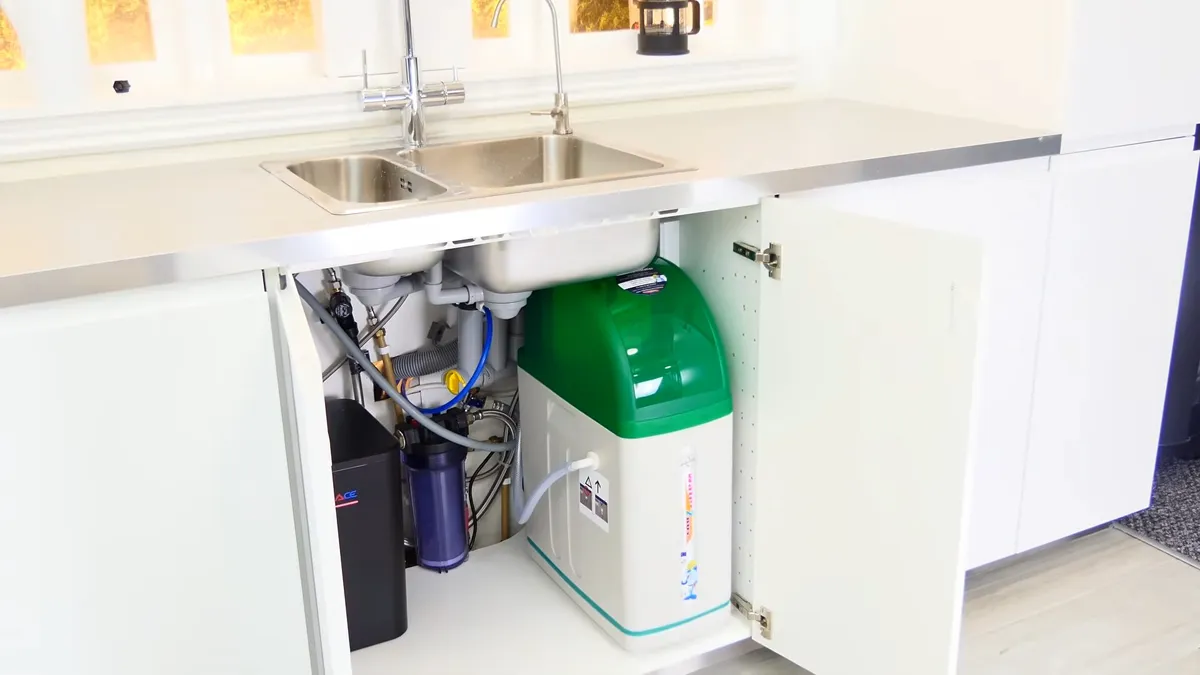
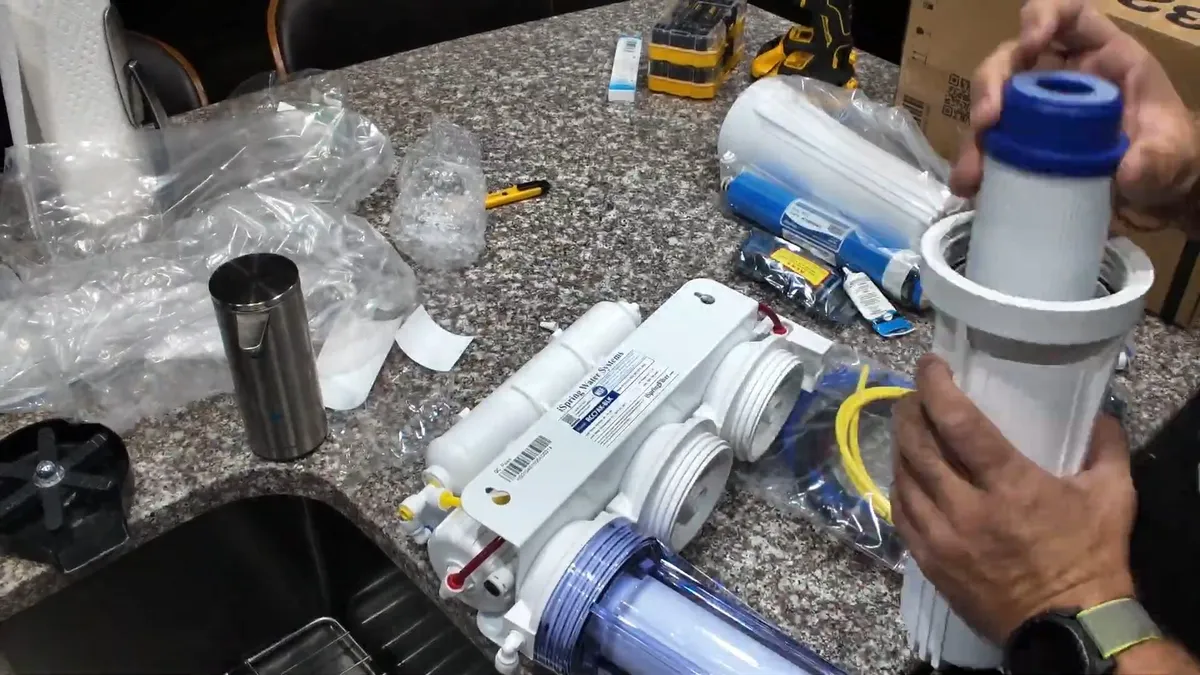
An under-sink RO system connects to the cold water supply line under the kitchen sink, runs water through a sediment pre-filter to remove particles, then through the RO membrane where pressure forces water through while dissolved substances are rejected to a drain line, and finally through a post-carbon polishing filter before storing filtered water in a pressure tank beneath the sink. A dedicated faucet on the countertop or sink deck provides the filtered water on demand.
The system operates passively, filling the storage tank slowly throughout the day so filtered water is available immediately when you open the dedicated faucet. Most under-sink RO systems require no electricity. Our RO installation service typically takes two to four hours, and the dedicated faucet fits most standard sink configurations without modification.
RO Maintenance in Surprise Hard-Water Conditions
Reverse osmosis systems require more frequent filter replacement in Surprise than in soft-water markets, because the hard CAP water loads the sediment pre-filter faster than soft water would. In Surprise conditions, the pre-filter typically needs replacement every four to six months rather than the six to twelve months that manufacturers often list as a general guideline. The RO membrane itself lasts two to five years, with the lower end applying to homes without a water softener upstream of the RO system.
Pairing a water softener with an RO system changes the RO maintenance picture significantly: the softener removes the calcium and magnesium before water reaches the RO pre-filter, reducing the pre-filter load and extending the membrane life toward the upper end of the range. The softener and RO system address different contaminants (hardness vs. dissolved solids) and work effectively together.
RO vs. Bottled Water in Surprise
Surprise households that currently purchase bottled water for drinking and cooking typically spend $40 to $80 per month on bottled water, depending on household size and consumption habits. An under-sink RO system, once installed, has an annual maintenance cost for filter replacement of $60 to $150 depending on the system and the number of filter stages. Over a three-year window, a household spending $60 per month on bottled water will spend roughly $2,160 on water while an RO system would cost perhaps $400 to $600 in that same period for maintenance. The RO system also eliminates the ongoing inconvenience of purchasing and storing bottled water and removes the associated plastic waste from single-use plastic bottles.
The quality of output from a properly maintained RO system exceeds the quality of most bottled water, which is not subject to the same testing and reporting requirements as municipal tap water.
Want clean drinking water at your Surprise kitchen tap? We install and service RO systems throughout Maricopa County.
Call (623) 253-0178