
Pool Leak Detection in Surprise, AZ
Private pools are common in Surprise's young-family master-planned communities, including Marley Park, Asante, and Greer Ranch. Active-adult communities such as Sun City Grand and Sun Village maintain shared community pool facilities. When a pool loses water faster than the Sonoran desert's natural evaporation rate, professional detection is the right first step.
Call (623) 253-0178In the Sonoran desert, pool evaporation is a normal and ongoing process. A pool in Surprise can lose approximately one-quarter inch of water per day to evaporation under typical conditions, more on hot windy days or in heated pools. When a pool is consistently losing more than one inch per day, when the autofill system runs constantly, or when there is unexplained wet soil near the equipment pad, the cause is almost certainly a leak rather than evaporation. Running continuous makeup water into a leaking pool adds cost to the monthly water bill and does not address the underlying failure.
Pool leaks in Surprise homes fall into two broad categories. Plumbing leaks occur in the underground lines running between the pool and the equipment pad, at pump and filter connections, or at return fittings and skimmer penetrations. Structural leaks occur at cracks in the pool shell, around light niches, or at the skimmer body where it meets the pool wall. Both types require professional detection equipment to locate precisely, and both can be found without draining the pool in most cases.
Signs Your Surprise Pool May Be Leaking
These are the indicators that point to a pool leak rather than normal Sonoran desert evaporation:
- The pool loses more than one inch of water in a 24-hour period when the pump is not running and the weather is not unusually hot or windy.
- The autofill valve or float valve runs for unusually long periods to maintain the water level, indicating the pool is losing water faster than expected.
- Air bubbles appear in the return jets when the pump is running, a sign of suction-side air intrusion pointing to a plumbing leak on the suction line.
- Wet, soft, or unusually lush ground near the equipment pad or along the route where underground plumbing lines run to the pool.
- The pool loses more water with the pump running than when the pump is off, which points to a plumbing leak rather than a structural shell leak.
- Cracks visible around the skimmer body, return fittings, light niches, or along the pool bond beam or shell.
How Pool Leak Detection Works in Surprise
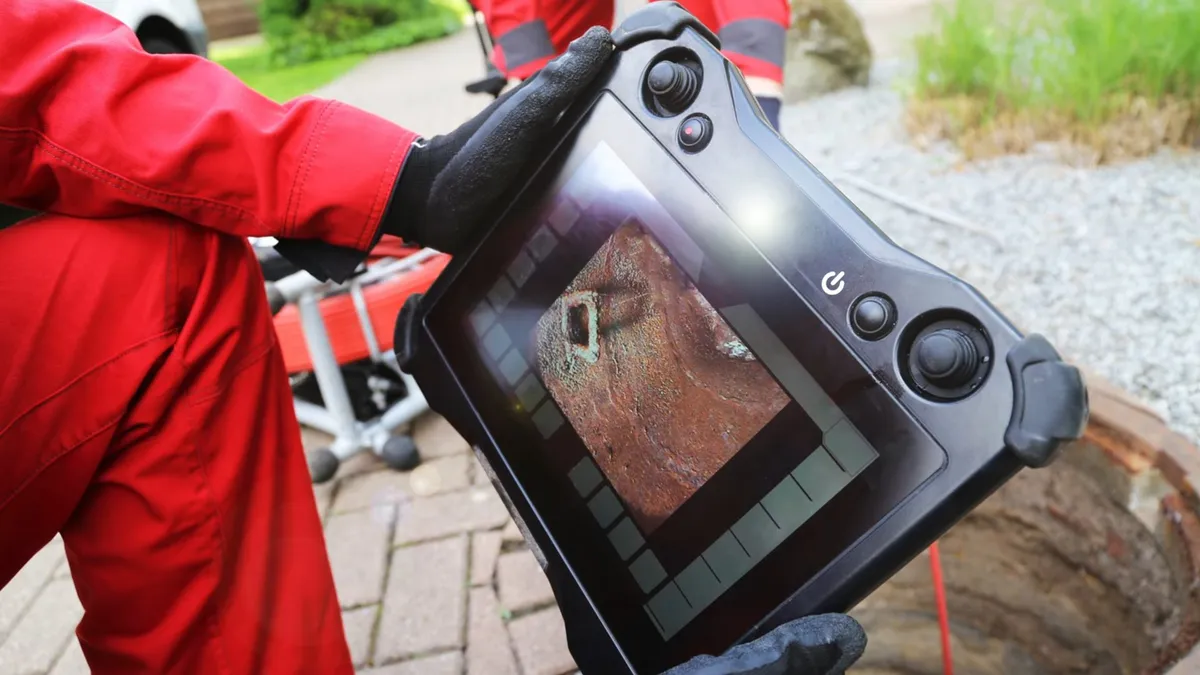
Professional pool leak detection begins with a structured isolation process. We use pressure testing to isolate each underground plumbing line (skimmer line, return lines, main drain, spa connections if present) and confirm which, if any, fail to hold pressure. A line that fails pressure testing has a leak somewhere between the equipment pad and the pool. From there, acoustic hydrophone equipment allows us to listen for the sound of water escaping a pressurized line through the surrounding soil, narrowing the location to a specific zone without excavation.
For suspected structural leaks, dye testing confirms and locates cracks or failed fittings around the pool shell, at light niches, and at return penetrations. A small amount of colored dye released near a suspected crack will be drawn into the shell if water is escaping through that point. Most pool leak detection in Surprise can be completed in a single visit, with a written report of findings before any repair work begins. We do not begin repairs without client approval of the written scope and cost.
Pool Leak Detection in Surprise: Private and Community Pools
The City of Surprise's dual-demographic character produces two distinct pool ownership contexts. In young-family communities like Marley Park and Greer Ranch, private residential pools are common and owned by individual homeowners. These pools are entirely the homeowner's responsibility for leak detection, plumbing repair, and structural maintenance. We serve these homeowners directly.
Sun City Grand and Sun Village maintain community pool facilities as part of their HOA amenity package. These community pools are managed by the respective associations and are not within our residential service scope. However, individual Sun City Grand and Sun Village homeowners who own private pools at their individual properties (not the shared community facilities) follow the same rules as any private pool owner in Surprise: detection and repair is the homeowner's responsibility, not the HOA's.
Maricopa County's hard water environment is a contributing factor to pool plumbing longevity. The same calcium and magnesium that builds scale inside water heaters and pipes also deposits at pool fittings, light niches, and within the plumbing connections at the equipment pad over time. Scale buildup at fitting interfaces can contribute to small leaks at those joints. Homes in the 85374 and 85387 ZIP codes with pools that are 15 or more years old are worth having inspected proactively.
Frequently Asked Questions
How do I know if my pool is leaking or just evaporating?
The bucket test is a practical field check. Fill a bucket with pool water and place it on a pool step at the same depth as the pool waterline. Mark the water level inside and outside the bucket. After 24 hours without running the pump, compare how much each lost. If the pool lost significantly more than the bucket, a leak is likely. A Surprise pool in summer can evaporate between a quarter and a half inch per day depending on heat and wind. Consistent loss above that points to a leak rather than evaporation.
Can you find a pool leak without draining the pool?
Yes, in most cases. Pressure testing of underground lines and acoustic hydrophone detection work with the pool full and plumbing under operating pressure. Dye testing for structural leaks also works with the pool full and the pump off. Some repair work may require partial draining depending on the leak location and the repair method, but detection almost never requires draining first. We will tell you in advance if the specific repair scope requires a partial drain.
How much does pool leak detection cost in Surprise?
A standard residential pool with a single pump, filter, and heater typically runs between $400 and $500 for a comprehensive detection visit covering pressure testing of all plumbing lines and dye testing for structural leaks. Pools with attached spas, negative edges, water features, or complex plumbing require additional time and cost. We provide a written estimate before the visit and a written report of findings after it. Call (623) 253-0178 for a current quote specific to your pool configuration.
Can a pool leak damage my foundation or yard in Surprise?
Yes. Sustained water loss from a pool leak can migrate through the soil over time and affect the stability of surrounding ground, nearby landscaping, or structures close to the pool including the home's foundation. In Surprise's caliche-soil environment, water from a pool plumbing leak does not always percolate straight down: it can travel horizontally through soil layers until it finds a path to the surface. Undetected leaks running for months or years can cause soil disturbance that is more costly to address than the original plumbing repair.
Pool Leak Detection Across Surprise and Maricopa County
We provide pool leak detection throughout the City of Surprise and the surrounding Maricopa County communities. A few of the areas we serve for this service:
Ready to Call a Plumber in Surprise, AZ?
Surprise AZ Plumbing Guys serves every ZIP code in the City of Surprise and surrounding Maricopa County, from Sun City Grand to Marley Park, Bell Road to the White Tank Mountains. Call any time, day or night.
(623) 253-0178